Top Tips for Tiling in Cold Weather
As temperatures drop during the winter months, tilers must take additional precautions to avoid installation failures, extended curing times, and unnecessary project delays. Cold weather affects how tiling materials cure, dry, and perform, so planning and preparation are essential.
What Is the Minimum Temperature for Tiling?
When tiling in cold weather, it is essential that the temperature is at least 5°C and rising for any construction project involving cement‑based or epoxy products. The phrase “and rising” is critical. Starting tiling work at 5°C is not sufficient if temperatures are expected to fall later in the day or overnight.
Just as important as air temperature is the temperature of the floor or wall background. Substrate temperatures must also be at least 5°C and rising. In open‑plan new builds or unheated properties, floors and walls may remain below 5°C all day, even if the air temperature increases slightly.
How Does Cold Temperatures Affect Adhesives, Grouts, and Levellers?
Cold temperatures significantly increase the working time, open time, and drying time of cement‑based products, including tile adhesives, grouts, and floor levellers. This effect is especially noticeable with standard‑setting products.
More importantly, if tile adhesives, grouts, or sealants freeze during their initial curing phase, the chemical reaction required to form a permanent bond can be disrupted. This can lead to poor adhesion, reduced strength, and long‑term failure. In the case of cement grouts, cold conditions can also increase the likelihood of efflorescence forming on the surface.
In very cold conditions, standard‑setting adhesives may still not be sufficiently cured after seven days, compared to around 24 hours at an ambient temperature of 20°C. This is due to the cement hydration process slowing dramatically at low temperatures.
What Adhesives Should Be Used in Cold Conditions?
When tiling in cold weather, it is often advisable to switch from standard‑setting products to rapid‑setting or semi‑rapid tile adhesives. Rapid‑setting products help reduce waiting times and allow work to continue without the risk of tiles being disturbed or grouted too early.
Products such as BAL Rapid‑Flex One are designed to perform in challenging conditions and allow earlier grouting, even when temperatures are lower than ideal. Semi‑rapid products such as BAL Flex One can also be suitable, offering a balance between extended working time and faster curing.
Using the correct BAL adhesive ensures that tiling work can progress safely without compromising performance in colder environments.
How Does Cold Weather Affect Floor Levelling?
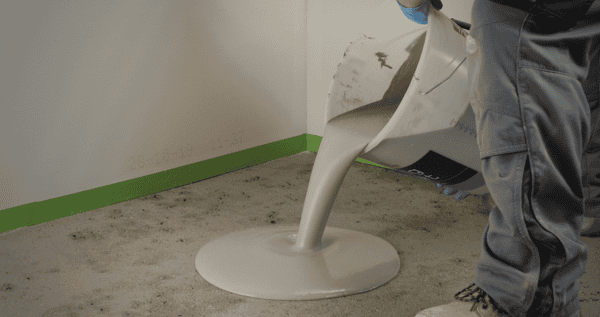
Cold temperatures also extend the setting and drying times of floor levelling compounds, particularly when applied over cold concrete substrates. This can significantly delay tiling schedules if not accounted for.
In cold conditions, switching to a rapid‑setting levelling compound such as BAL Level Fast can help keep projects on track. BAL Level Fast allows the floor to be tiled sooner (from 45 minutes), even in cooler environments, reducing downtime on site.
Lower temperatures will also slow the drying times of primers and other preparation products, so these additional delays should always be factored into project planning.
Can You Speed Up Tiling Adhesives and Grouts in Cold Weather with Warm Water?
You should never attempt to force or accelerate setting times. Mixing adhesives, levellers, or grouts with warm or hot water can cause flash‑setting, which severely impacts product performance and working time.
Clean, cold water that has been allowed to reach room temperature is recommended for optimal consistency, working time, and open time.
How Should Underfloor Heating Be Used Before Tiling?
If underfloor heating is installed within a screed, it should be commissioned before tiling begins. The temperature should be increased gradually at a rate of 5°C per day until the maximum operating temperature, as specified by the heating manufacturer, is reached.
Before tiling starts, the heating should then be reduced to around 15°C. This is particularly helpful during colder months, as it brings the substrate temperature up to a suitable level for tiling.
Where underfloor heating is not present, temporary heating can be used to warm indoor areas to the required 5°C and rising before tiling commences.
How Does Cold Weather Affect Screed Drying?
Cold conditions can significantly slow the drying process of screeds, especially those without underfloor heating. Moisture testing should always be carried out before tiling to confirm that the screed is dry enough.
As a general guide, liquid screeds dry at approximately 1mm per day up to 50mm, with additional depth drying at around 2 days per millimetre. However, drying times can vary widely depending on site conditions, ventilation, and temperature.
How Should Tile Adhesives and Tile Grouts Be Stored in Winter?
Cold weather storage is just as important as correct application. Bags of adhesives, levellers, and grouts should never be left outside or stored overnight in vans, as freezing temperatures can negatively affect product performance.
There have been instances where primers and liquid products have frozen in vehicles, rendering them unusable. Where possible, tiling products should be stored indoors in a dry, heated space. If this is not possible, products should be brought indoors several hours before use to allow them to reach room temperature.
On‑Site Support and Technical Advice
If you are unsure whether conditions are suitable for tiling, BAL offers comprehensive technical support. A nationwide team of Training and Technical Support Managers is available to provide advice, training, and on‑site assistance.
Support includes assessing site conditions, advising whether substrates are ready for tiling, and carrying out on‑site carbide bomb moisture tests. Results are explained clearly, and guidance is provided on the best course of action before tiling begins.